7.2 线程安全队列
1.disruptor
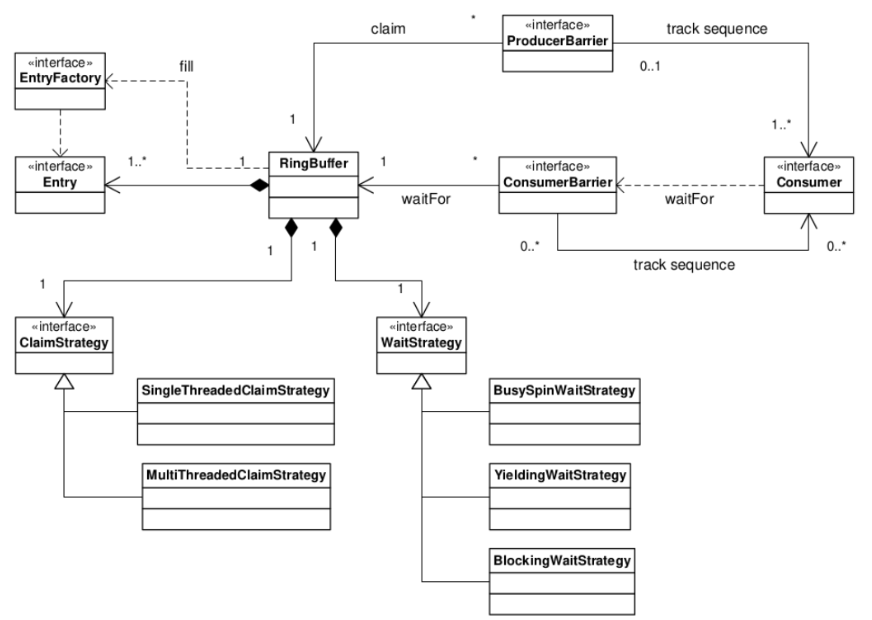
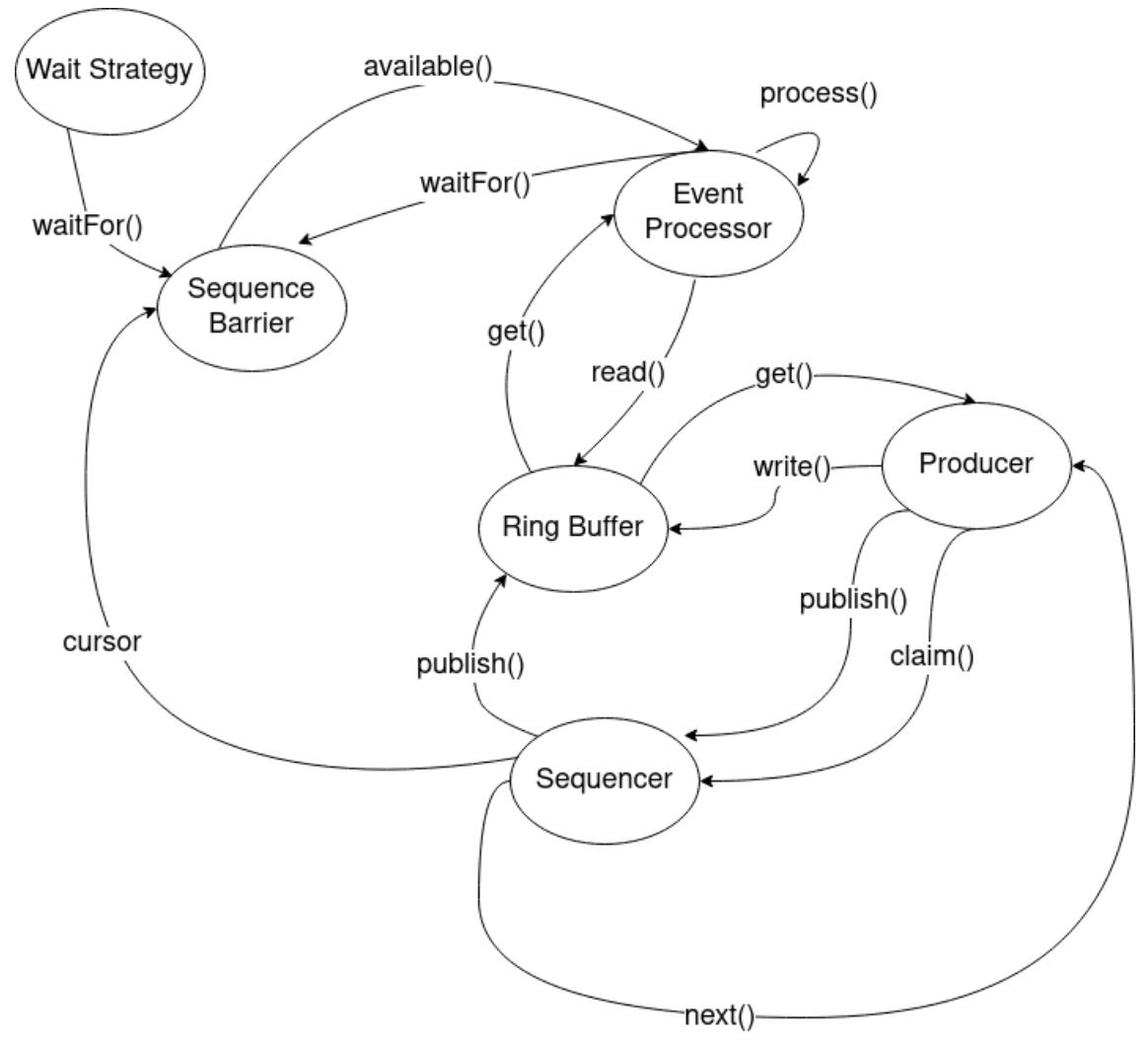
Disruptor 通过模块化组件设计实现低延迟并发通信,各组件功能与协作逻辑明确,具体如下:
| 组件名称 | 核心功能 | 关键特性 |
|---|---|---|
| 生产者(Producer) | 生成并发布事件到环形缓冲区 | 单生产者场景无竞争,多生产者通过 CAS 操作抢占缓冲区槽位,避免锁开销 |
| 环形缓冲区(Ring Buffer) | 存储事件的核心数据结构 | 预分配固定大小,无运行时内存分配 / 回收,支持指针数组或结构体数组存储事件容器 |
| 序列器(Sequencer) | 管理生产者 / 消费者的序列号同步 | 作为并发控制核心,通过序列号协调数据读写顺序,确保生产者与消费者操作的一致性 |
| 事件处理器(Event Processor,即消费者) | 从环形缓冲区读取并处理事件 | 支持多消费者并行或按依赖链处理(如流水线多阶段任务),通过自身序列号跟踪处理进度,无需锁同步 |
| 序列屏障(Sequence Barrier) | 控制消费者对事件的读取时机 | 消费者通过屏障检查序列号是否可用,结合等待策略(如忙等、yield、阻塞)决定等待方式,确保安全读取 |
| 等待策略(Wait Strategy) | 定义消费者无事件可处理时的行为 | 平衡延迟与 CPU 占用:忙等策略低延迟但高 CPU,阻塞策略低 CPU 但高延迟,yield 策略为中间方案 |
#ifndef DISRUPTOR_HPP
#define DISRUPTOR_HPP

#include <algorithm>
#include <array>
#include <atomic>
#include <chrono>
#include <condition_variable>
#include <functional>
#include <iostream>
#include <limits>
#include <memory>
#include <new>  // for std::align
#include <stdexcept>
#include <thread>
#include <vector>

// --- 平台相关的性能优化 ---
#if defined(_MSC_VER) && (defined(_M_IX86) || defined(_M_X64))
#include <intrin.h>
#define HAS_MM_PAUSE 1
#elif (defined(__GNUC__) || defined(__clang__)) && \
    (defined(__i386__) || defined(__x86_64__))
#include <immintrin.h>
#define HAS_MM_PAUSE 1
#else
#define HAS_MM_PAUSE 0
#endif

#ifdef __cpp_lib_hardware_interference_size
static constexpr size_t CACHE_LINE_SIZE =
    std::hardware_destructive_interference_size;
#else
static constexpr size_t CACHE_LINE_SIZE = 64;
#endif

template <typename T>
struct alignas(CACHE_LINE_SIZE) AlignedAtomic {
  std::atomic<T> value;
  AlignedAtomic(const AlignedAtomic&) = delete;
  AlignedAtomic& operator=(const AlignedAtomic&) = delete;
  AlignedAtomic(AlignedAtomic&&) = delete;
  AlignedAtomic& operator=(AlignedAtomic&&) = delete;
  AlignedAtomic(T initial_value = T()) : value(initial_value) {}
};

using Sequence = AlignedAtomic<long long>;

namespace disruptor {

enum class ProducerType { SINGLE, MULTI };

template <typename T>
class ExceptionHandler {
 public:
  virtual ~ExceptionHandler() = default;
  virtual void handleEventException(const std::exception& ex,
                                    long long sequence, T* event) = 0;
  virtual void handleOnStartException(const std::exception& ex) = 0;
  virtual void handleOnShutdownException(const std::exception& ex) = 0;
};

template <typename T>
class DefaultExceptionHandler : public ExceptionHandler<T> {
 public:
  void handleEventException(const std::exception& ex, long long sequence,
                            T* event) override {
    std::cerr << "Disruptor: Exception on seq " << sequence << ": " << ex.what()
              << std::endl;
  }
  void handleOnStartException(const std::exception& ex) override {
    std::cerr << "Disruptor: Exception on start: " << ex.what() << std::endl;
  }
  void handleOnShutdownException(const std::exception& ex) override {
    std::cerr << "Disruptor: Exception on shutdown: " << ex.what() << std::endl;
  }
};

template <typename T>
class RingBuffer {
 private:
  const size_t capacity_;
  const size_t indexMask_;
  std::unique_ptr<char[]> buffer_;
  T* entries_;
  static bool isPowerOfTwo(size_t n) { return (n > 0) && ((n & (n - 1)) == 0); }

 public:
  explicit RingBuffer(size_t capacity)
      : capacity_(capacity), indexMask_(capacity - 1) {
    if (!isPowerOfTwo(capacity)) {
      throw std::invalid_argument(
          "RingBuffer capacity must be a power of two.");
    }
    size_t buffer_size = capacity * sizeof(T) + alignof(T) - 1;
    buffer_ = std::make_unique<char[]>(buffer_size);
    void* ptr = buffer_.get();
    size_t space = buffer_size;
    entries_ = static_cast<T*>(
        std::align(alignof(T), capacity * sizeof(T), ptr, space));
    for (size_t i = 0; i < capacity; ++i) {
      new (&entries_[i]) T();
    }
  }
  ~RingBuffer() {
    for (size_t i = 0; i < capacity_; ++i) {
      entries_[i].~T();
    }
  }
  size_t getCapacity() const { return capacity_; }
  T& get(long long sequence) { return entries_[sequence & indexMask_]; }
};

class WaitStrategy {
 public:
  virtual ~WaitStrategy() = default;
  virtual long long waitFor(long long sequence, Sequence& cursor,
                            const std::vector<Sequence*>& dependentSequences,
                            const std::atomic<bool>& running) = 0;
  virtual void signalAllWhenBlocking() = 0;
};

inline long long getGatingSequence(
    const Sequence& cursor, const std::vector<Sequence*>& dependentSequences) {
  if (dependentSequences.empty()) {
    return cursor.value.load(std::memory_order_acquire);
  }
  long long minVal = std::numeric_limits<long long>::max();
  for (const auto* dep : dependentSequences) {
    minVal = std::min(minVal, dep->value.load(std::memory_order_acquire));
  }
  return minVal;
}

class BlockingWaitStrategy : public WaitStrategy {
 private:
  std::mutex mutex_;
  std::condition_variable condition_;

 public:
  long long waitFor(long long sequence, Sequence& cursor,
                    const std::vector<Sequence*>& dependentSequences,
                    const std::atomic<bool>& running) override {
    std::unique_lock<std::mutex> lock(mutex_);
    condition_.wait(lock, [&] {
      return !running.load(std::memory_order_relaxed) ||
             getGatingSequence(cursor, dependentSequences) >= sequence;
    });
    return std::min(cursor.value.load(std::memory_order_acquire),
                    getGatingSequence(cursor, dependentSequences));
  }
  void signalAllWhenBlocking() override { condition_.notify_all(); }
};

class YieldingWaitStrategy : public WaitStrategy {
 public:
  long long waitFor(long long sequence, Sequence& cursor,
                    const std::vector<Sequence*>& dependentSequences,
                    const std::atomic<bool>& running) override {
    int counter = 100;
    while (getGatingSequence(cursor, dependentSequences) < sequence &&
           running.load(std::memory_order_relaxed)) {
      if (counter > 0) {
        --counter;
      } else {
        std::this_thread::yield();
      }
    }
    return std::min(cursor.value.load(std::memory_order_acquire),
                    getGatingSequence(cursor, dependentSequences));
  }
  void signalAllWhenBlocking() override {}
};

class BusySpinWaitStrategy : public WaitStrategy {
 public:
  long long waitFor(long long sequence, Sequence& cursor,
                    const std::vector<Sequence*>& dependentSequences,
                    const std::atomic<bool>& running) override {
    while (getGatingSequence(cursor, dependentSequences) < sequence &&
           running.load(std::memory_order_relaxed)) {
#if HAS_MM_PAUSE
      _mm_pause();
#endif
    }
    return std::min(cursor.value.load(std::memory_order_acquire),
                    getGatingSequence(cursor, dependentSequences));
  }
  void signalAllWhenBlocking() override {}
};

class SleepingWaitStrategy : public WaitStrategy {
 private:
  const int spin_retries_ = 100;
  const int yield_retries_ = 100;
  const std::chrono::nanoseconds sleepTimeNs_;

 public:
  explicit SleepingWaitStrategy(long long sleepTimeNs = 100000)
      : sleepTimeNs_(sleepTimeNs) {}
  long long waitFor(long long sequence, Sequence& cursor,
                    const std::vector<Sequence*>& dependentSequences,
                    const std::atomic<bool>& running) override {
    int counter = spin_retries_ + yield_retries_;
    while (getGatingSequence(cursor, dependentSequences) < sequence &&
           running.load(std::memory_order_relaxed)) {
      if (counter > yield_retries_) {
        --counter;
      } else if (counter > 0) {
        --counter;
        std::this_thread::yield();
      } else {
        std::this_thread::sleep_for(sleepTimeNs_);
      }
    }
    return std::min(cursor.value.load(std::memory_order_acquire),
                    getGatingSequence(cursor, dependentSequences));
  }
  void signalAllWhenBlocking() override {}
};

class ISequencer {
 public:
  virtual ~ISequencer() = default;
  virtual long long next(int n = 1) = 0;
  virtual void publish(long long sequence) = 0;
  virtual void publish(long long lo, long long hi) = 0;
  virtual long long getCursor() const = 0;
  virtual Sequence& getCursorSequence() = 0;
  virtual void addGatingSequences(const std::vector<Sequence*>& sequences) = 0;
  virtual void removeGatingSequence(Sequence* sequence) = 0;
};

class MultiProducerSequencer : public ISequencer {
 private:
  WaitStrategy& waitStrategy_;
  Sequence cursor_;
  std::vector<Sequence*> gatingSequences_;
  const size_t capacity_;
  Sequence claimCursor_;
  std::unique_ptr<AlignedAtomic<long long>[]> availableBuffer_;

 public:
  MultiProducerSequencer(size_t bufferSize, WaitStrategy& waitStrategy)
      : waitStrategy_(waitStrategy),
        cursor_(-1),
        capacity_(bufferSize),
        claimCursor_(-1),
        availableBuffer_(
            std::make_unique<AlignedAtomic<long long>[]>(bufferSize)) {
    for (size_t i = 0; i < capacity_; ++i) {
      availableBuffer_[i].value.store(-1);
    }
  }
  void addGatingSequences(const std::vector<Sequence*>& sequences) override {
    gatingSequences_.insert(gatingSequences_.end(), sequences.begin(),
                            sequences.end());
  }
  void removeGatingSequence(Sequence* sequence) override {
    auto it =
        std::remove(gatingSequences_.begin(), gatingSequences_.end(), sequence);
    gatingSequences_.erase(it, gatingSequences_.end());
  }
  long long getCursor() const override {
    return cursor_.value.load(std::memory_order_acquire);
  }
  Sequence& getCursorSequence() override { return cursor_; }
  long long next(int n = 1) override {
    if (n <= 0) throw std::invalid_argument("n must be positive.");
    long long currentClaim =
        claimCursor_.value.fetch_add(n, std::memory_order_acq_rel);
    long long lo = currentClaim + 1;
    long long hi = currentClaim + n;
    long long wrapPoint = hi - capacity_;
    while (wrapPoint > getMinimumGatingSequenceFromConsumers()) {
      std::this_thread::yield();
    }
    return lo;
  }
  void publish(long long sequence) override { publish(sequence, sequence); }
  void publish(long long lo, long long hi) override {
    for (long long l = lo; l <= hi; ++l) {
      setAvailable(l);
    }
    long long currentCursorValue =
        cursor_.value.load(std::memory_order_relaxed);
    while (true) {
      long long nextSequence = currentCursorValue + 1;
      if (nextSequence > hi) {
        waitStrategy_.signalAllWhenBlocking();
        break;
      }
      if (isAvailable(nextSequence)) {
        if (!cursor_.value.compare_exchange_weak(
                currentCursorValue, nextSequence, std::memory_order_release,
                std::memory_order_relaxed)) {
        }
      } else {
        waitStrategy_.signalAllWhenBlocking();
        break;
      }
    }
  }

 private:
  void setAvailable(long long sequence) {
    availableBuffer_[sequence & (capacity_ - 1)].value.store(
        sequence / capacity_, std::memory_order_release);
  }
  bool isAvailable(long long sequence) {
    return availableBuffer_[sequence & (capacity_ - 1)].value.load(
               std::memory_order_acquire) == (sequence / capacity_);
  }
  long long getMinimumGatingSequenceFromConsumers() {
    if (gatingSequences_.empty()) {
      return std::numeric_limits<long long>::max();
    }
    long long minVal = std::numeric_limits<long long>::max();
    for (Sequence* gate : gatingSequences_) {
      minVal = std::min(minVal, gate->value.load(std::memory_order_acquire));
    }
    return minVal;
  }
};

class SingleProducerSequencer : public ISequencer {
 private:
  WaitStrategy& waitStrategy_;
  Sequence cursor_;
  Sequence cachedGatingSequence_;
  std::vector<Sequence*> gatingSequences_;
  const size_t capacity_;
  long long nextValue_ = -1;

 public:
  SingleProducerSequencer(size_t bufferSize, WaitStrategy& waitStrategy)
      : waitStrategy_(waitStrategy),
        cursor_(-1),
        cachedGatingSequence_(-1),
        capacity_(bufferSize) {}
  void addGatingSequences(const std::vector<Sequence*>& sequences) override {
    gatingSequences_.insert(gatingSequences_.end(), sequences.begin(),
                            sequences.end());
  }
  void removeGatingSequence(Sequence* sequence) override {
    auto it =
        std::remove(gatingSequences_.begin(), gatingSequences_.end(), sequence);
    gatingSequences_.erase(it, gatingSequences_.end());
  }
  long long getCursor() const override {
    return cursor_.value.load(std::memory_order_acquire);
  }
  Sequence& getCursorSequence() override { return cursor_; }
  long long next(int n = 1) override {
    if (n <= 0) throw std::invalid_argument("n must be positive.");
    long long lo = nextValue_ + 1;
    long long hi = nextValue_ + n;
    long long wrapPoint = hi - capacity_;
    long long cachedGate =
        cachedGatingSequence_.value.load(std::memory_order_acquire);
    if (wrapPoint > cachedGate ||
        cachedGate > cursor_.value.load(std::memory_order_relaxed)) {
      long long minSequence;
      while (wrapPoint >
             (minSequence = getMinimumGatingSequenceFromConsumers())) {
        std::this_thread::yield();
      }
      cachedGatingSequence_.value.store(minSequence, std::memory_order_release);
    }
    nextValue_ = hi;
    return lo;
  }
  void publish(long long sequence) override {
    cursor_.value.store(sequence, std::memory_order_release);
    waitStrategy_.signalAllWhenBlocking();
  }
  void publish(long long lo, long long hi) override { publish(hi); }

 private:
  long long getMinimumGatingSequenceFromConsumers() {
    if (gatingSequences_.empty()) {
      return std::numeric_limits<long long>::max();
    }
    long long minVal = std::numeric_limits<long long>::max();
    for (Sequence* gate : gatingSequences_) {
      minVal = std::min(minVal, gate->value.load(std::memory_order_acquire));
    }
    return minVal;
  }
};

template <typename T>
class EventHandler {
 public:
  virtual ~EventHandler() = default;
  virtual void onEvent(T& event, long long sequence, bool endOfBatch) = 0;
  virtual void onStart() {}
  virtual void onShutdown() {}
};

template <typename T>
class EventProcessor {
 private:
  std::unique_ptr<Sequence> sequence_;
  RingBuffer<T>& ringBuffer_;
  ISequencer& sequencer_;
  WaitStrategy& waitStrategy_;
  EventHandler<T>& eventHandler_;
  ExceptionHandler<T>& exceptionHandler_;
  std::vector<Sequence*> dependentSequences_;
  std::atomic<bool> running_{false};
  std::thread thread_;

 public:
  EventProcessor(RingBuffer<T>& ringBuffer, ISequencer& sequencer,
                 WaitStrategy& waitStrategy, EventHandler<T>& eventHandler,
                 ExceptionHandler<T>& exceptionHandler)
      : sequence_(new Sequence(-1)),
        ringBuffer_(ringBuffer),
        sequencer_(sequencer),
        waitStrategy_(waitStrategy),
        eventHandler_(eventHandler),
        exceptionHandler_(exceptionHandler) {}
  void addDependentSequences(const std::vector<Sequence*>& sequences) {
    dependentSequences_.insert(dependentSequences_.end(), sequences.begin(),
                               sequences.end());
  }
  void run() {
    running_.store(true);
    try {
      eventHandler_.onStart();
    } catch (const std::exception& ex) {
      exceptionHandler_.handleOnStartException(ex);
      running_.store(false);
      return;
    }
    long long nextSequence = sequence_->value.load() + 1;
    while (running_.load()) {
      try {
        const long long availableSequence =
            waitStrategy_.waitFor(nextSequence, sequencer_.getCursorSequence(),
                                  dependentSequences_, running_);
        if (!running_.load()) break;

        if (nextSequence <= availableSequence) {
          while (nextSequence <= availableSequence) {
            eventHandler_.onEvent(ringBuffer_.get(nextSequence), nextSequence,
                                  nextSequence == availableSequence);
            nextSequence++;
          }
          sequence_->value.store(availableSequence, std::memory_order_release);
          // NOTE:
          // 消费者也是生产者。当它更新自己的进度时,必须通知可能正在等待它的下游消费者。
          waitStrategy_.signalAllWhenBlocking();
        } else {
          // 如果没有事件可处理,可以短暂让出CPU,避免在某些等待策略中空转
          std::this_thread::sleep_for(std::chrono::nanoseconds(1));
        }

      } catch (const std::exception& ex) {
        if (running_.load()) {
          exceptionHandler_.handleEventException(
              ex, nextSequence, &ringBuffer_.get(nextSequence));
          sequence_->value.store(nextSequence);
          nextSequence++;
        }
      }
    }
    try {
      eventHandler_.onShutdown();
    } catch (const std::exception& ex) {
      exceptionHandler_.handleOnShutdownException(ex);
    }
  }
  void start() { thread_ = std::thread(&EventProcessor::run, this); }
  void halt() {
    running_.store(false);
    waitStrategy_.signalAllWhenBlocking();
    if (thread_.joinable()) {
      thread_.join();
    }
  }
  Sequence& getSequence() const { return *sequence_; }
};

template <typename T>
class Disruptor {
 private:
  RingBuffer<T> ringBuffer_;
  std::unique_ptr<WaitStrategy> waitStrategy_;
  std::unique_ptr<ISequencer> sequencer_;
  std::vector<std::unique_ptr<EventProcessor<T>>> eventProcessors_;
  std::unique_ptr<ExceptionHandler<T>> exceptionHandler_;

 public:
  Disruptor(
      size_t capacity, ProducerType producerType = ProducerType::SINGLE,
      WaitStrategy* strategy = new BlockingWaitStrategy(),
      ExceptionHandler<T>* exceptionHandler = new DefaultExceptionHandler<T>())
      : ringBuffer_(capacity),
        waitStrategy_(strategy),
        exceptionHandler_(exceptionHandler) {
    if (producerType == ProducerType::SINGLE) {
      sequencer_ =
          std::make_unique<SingleProducerSequencer>(capacity, *waitStrategy_);
    } else {
      sequencer_ =
          std::make_unique<MultiProducerSequencer>(capacity, *waitStrategy_);
    }
  }
  EventProcessor<T>* handleEventsWith(
      EventHandler<T>& handler,
      const std::vector<EventProcessor<T>*>& dependencies = {}) {
    for (auto dep_proc : dependencies) {
      sequencer_->removeGatingSequence(&dep_proc->getSequence());
    }
    auto processor = std::make_unique<EventProcessor<T>>(
        ringBuffer_, *sequencer_, *waitStrategy_, handler, *exceptionHandler_);
    std::vector<Sequence*> depSequences;
    for (auto dep : dependencies) {
      depSequences.push_back(&dep->getSequence());
    }
    processor->addDependentSequences(depSequences);
    sequencer_->addGatingSequences({&processor->getSequence()});
    auto* processorPtr = processor.get();
    eventProcessors_.push_back(std::move(processor));
    return processorPtr;
  }
  void start() {
    for (auto& processor : eventProcessors_) {
      processor->start();
    }
  }
  void shutdown() {
    for (auto it = eventProcessors_.rbegin(); it != eventProcessors_.rend();
         ++it) {
      (*it)->halt();
    }
  }
  ISequencer& getSequencer() { return *sequencer_; }
  RingBuffer<T>& getRingBuffer() { return ringBuffer_; }
  void publishEvent(
      std::function<void(T& event, long long sequence)> translator) {
    const long long sequence = sequencer_->next();
    try {
      translator(ringBuffer_.get(sequence), sequence);
    } catch (...) {
      sequencer_->publish(sequence);
      throw;
    }
    sequencer_->publish(sequence);
  }
  void publishEvents(
      std::function<void(T& event, long long sequence)> translator,
      int batchSize) {
    if (batchSize <= 0) {
      return;
    }
    const long long lo = sequencer_->next(batchSize);
    const long long hi = lo + (batchSize - 1);
    try {
      for (long long sequence = lo; sequence <= hi; ++sequence) {
        translator(ringBuffer_.get(sequence), sequence);
      }
    } catch (...) {
      sequencer_->publish(lo, hi);
      throw;
    }
    sequencer_->publish(lo, hi);
  }
};

}  // namespace disruptor

#endif  // DISRUPTOR_HPP
#include <iomanip>
#include <iostream>
#include <numeric>
#include <string>
#include <vector>

#include "disruptor.hpp"

// ------------------------------------------------------------------
// 1. 测试用的事件和事件处理器定义
// ------------------------------------------------------------------

// 定义一个事件结构体
struct TestEvent {
  long long value;
  std::string source;

  // 默认构造函数是必须的,因为RingBuffer会提前创建对象
  TestEvent() : value(0), source("default") {}
};

// 打印处理器,用于最终消费和验证
class PrintEventHandler : public disruptor::EventHandler<TestEvent> {
 private:
  int handlerId_;
  bool silent_;  // 添加一个成员变量来控制是否打印

 public:
  // 构造函数:添加一个带默认值的布尔参数
  explicit PrintEventHandler(int id, bool silent = false)
      : handlerId_(id), silent_(silent) {}

  void onEvent(TestEvent& event, long long sequence, bool endOfBatch) override {
    // 使用 silent_ 成员变量来决定是否执行打印操作
    if (!silent_) {
      // 保持输出整洁,只在特定条件下打印
      if (sequence < 100 || sequence % 1000000 == 0) {
        std::cout << "[Handler " << handlerId_ << "] Seq: " << sequence
                  << ", Value: " << event.value << ", Source: " << event.source
                  << (endOfBatch ? " (EndOfBatch)\n" : "\n");
      }
    }
  }
};

// 模拟写入日志的处理器
class JournalingEventHandler : public disruptor::EventHandler<TestEvent> {
 public:
  void onEvent(TestEvent& event, long long sequence, bool endOfBatch) override {
    event.source += " -> Journaled";
  }
};

// 模拟数据复制的处理器
class ReplicatingEventHandler : public disruptor::EventHandler<TestEvent> {
 public:
  void onEvent(TestEvent& event, long long sequence, bool endOfBatch) override {
    event.source += " -> Replicated";
  }
};

// 一个简单的函数,用于等待消费者处理完所有事件
void waitForProcessing(disruptor::EventProcessor<TestEvent>& processor,
                       long long expected_sequence) {
  while (processor.getSequence().value.load(std::memory_order_acquire) <
         expected_sequence) {
    std::this_thread::sleep_for(std::chrono::milliseconds(1));
  }
}

// ------------------------------------------------------------------
// 2. 各种并发场景的演示
// ------------------------------------------------------------------

void run_spsc_scenario() {
  std::cout
      << "\n--- SCENARIO 1: Single Producer, Single Consumer (SPSC) ---\n";
  disruptor::Disruptor<TestEvent> disruptor(1024,
                                            disruptor::ProducerType::SINGLE);
  PrintEventHandler handler(1);  // 此处调用是正确的,因为 silent 默认为 false
  auto* processor = disruptor.handleEventsWith(handler);

  disruptor.start();

  const int event_count = 10;
  std::cout << "Publisher: Sending " << event_count << " events...\n";
  for (int i = 0; i < event_count; ++i) {
    disruptor.publishEvent([&](TestEvent& event, long long seq) {
      event.value = i;
      event.source = "Producer";
    });
  }

  waitForProcessing(*processor, event_count - 1);
  disruptor.shutdown();
  std::cout << "SPSC scenario finished.\n";
}

void run_spmc_scenario() {
  std::cout << "\n--- SCENARIO 2: Single Producer, Multiple Consumers (SPMC "
               "Broadcast) ---\n";
  disruptor::Disruptor<TestEvent> disruptor(1024,
                                            disruptor::ProducerType::SINGLE);

  PrintEventHandler handler1(1);
  PrintEventHandler handler2(2);
  auto* processor1 = disruptor.handleEventsWith(handler1);
  auto* processor2 = disruptor.handleEventsWith(handler2);

  disruptor.start();

  const int event_count = 10;
  std::cout << "Publisher: Sending " << event_count
            << " events to 2 consumers...\n";
  for (int i = 0; i < event_count; ++i) {
    disruptor.publishEvent([&](TestEvent& event, long long seq) {
      event.value = i;
      event.source = "Producer";
    });
  }

  waitForProcessing(*processor1, event_count - 1);
  waitForProcessing(*processor2, event_count - 1);
  disruptor.shutdown();
  std::cout << "SPMC scenario finished.\n";
}

void run_mpmc_scenario() {
  std::cout << "\n--- SCENARIO 3: Multiple Producers, Multiple Consumers "
               "(MPMC) ---\n";
  disruptor::Disruptor<TestEvent> disruptor(1024,
                                            disruptor::ProducerType::MULTI);

  PrintEventHandler handler1(1);
  PrintEventHandler handler2(2);
  auto* processor1 = disruptor.handleEventsWith(handler1);
  auto* processor2 = disruptor.handleEventsWith(handler2);

  disruptor.start();

  const int events_per_producer = 5;
  auto producer_task = [&](int producer_id) {
    for (int i = 0; i < events_per_producer; ++i) {
      disruptor.publishEvent([&](TestEvent& event, long long seq) {
        event.value = (producer_id * 100) + i;
        event.source = "Producer " + std::to_string(producer_id);
      });
    }
  };

  std::cout << "Two producers starting, each sending " << events_per_producer
            << " events...\n";
  std::thread p1(producer_task, 1);
  std::thread p2(producer_task, 2);

  p1.join();
  p2.join();

  waitForProcessing(*processor1, (events_per_producer * 2) - 1);
  waitForProcessing(*processor2, (events_per_producer * 2) - 1);
  disruptor.shutdown();
  std::cout << "MPMC scenario finished.\n";
}

void run_dependency_graph_scenario() {
  std::cout
      << "\n--- SCENARIO 4: Dependency Graph (Diamond: P -> (A, B) -> C) ---\n";
  disruptor::Disruptor<TestEvent> disruptor(1024);

  JournalingEventHandler handlerA;
  ReplicatingEventHandler handlerB;
  PrintEventHandler handlerC(3);

  auto* procA = disruptor.handleEventsWith(handlerA);
  auto* procB = disruptor.handleEventsWith(handlerB);
  auto* procC = disruptor.handleEventsWith(handlerC, {procA, procB});

  disruptor.start();

  const int event_count = 5;
  std::cout << "Publisher: Sending " << event_count
            << " events into a diamond dependency graph...\n";
  for (int i = 0; i < event_count; ++i) {
    disruptor.publishEvent([&](TestEvent& event, long long seq) {
      event.value = i;
      event.source = "Producer";
    });
  }

  waitForProcessing(*procC, event_count - 1);
  disruptor.shutdown();
  std::cout << "Dependency graph scenario finished. Note the 'source' field in "
               "the output.\n";
}

// ------------------------------------------------------------------
// 3. 等待策略性能对比
// ------------------------------------------------------------------

void run_wait_strategy_comparison() {
  std::cout << "\n--- PERFORMANCE TEST: Comparing Wait Strategies ---"
            << std::endl;
  std::cout << "Each test will run a SPSC scenario with 5,000,000 events.\n";

  const long long event_count = 5000000;
  const size_t buffer_size = 2048;

  auto run_test = [&](const std::string& name,
                      disruptor::WaitStrategy* strategy) {
    std::cout << std::left << std::setw(25) << name << ": " << std::flush;

    disruptor::Disruptor<TestEvent> disruptor(
        buffer_size, disruptor::ProducerType::SINGLE, strategy);

    PrintEventHandler silent_handler(1, true);
    auto* processor = disruptor.handleEventsWith(silent_handler);

    disruptor.start();

    auto start_time = std::chrono::high_resolution_clock::now();

    // 不能一次性发布远超缓冲区大小的事件。改为分批发布。
    const int batch_size = 1024;  // 设置一个合理的批次大小
    for (long long i = 0; i < event_count; i += batch_size) {
      long long count_in_batch =
          std::min((long long)batch_size, event_count - i);
      disruptor.publishEvents(
          [&](TestEvent& event, long long seq) { event.value = seq; },
          count_in_batch);
    }

    waitForProcessing(*processor, event_count - 1);

    auto end_time = std::chrono::high_resolution_clock::now();
    std::chrono::duration<double, std::milli> duration = end_time - start_time;

    disruptor.shutdown();

    std::cout << std::fixed << std::setprecision(2) << duration.count()
              << " ms\n";
  };

  run_test("BusySpinWaitStrategy", new disruptor::BusySpinWaitStrategy());
  run_test("YieldingWaitStrategy", new disruptor::YieldingWaitStrategy());
  run_test("SleepingWaitStrategy", new disruptor::SleepingWaitStrategy());
  run_test("BlockingWaitStrategy", new disruptor::BlockingWaitStrategy());
}

// ------------------------------------------------------------------
// 主函数
// ------------------------------------------------------------------
int main() {
  std::cout << "===============================================\n";
  std::cout << " Disruptor C++ Final Implementation Test\n";
  std::cout << "===============================================\n";

  run_spsc_scenario();
  run_spmc_scenario();
  run_mpmc_scenario();
  run_dependency_graph_scenario();
  run_wait_strategy_comparison();

  return 0;
}
zhixuan@gpu04:~/disruptor$ ./disruptor_test
===============================================
 Disruptor C++ Final Implementation Test
===============================================

--- SCENARIO 1: Single Producer, Single Consumer (SPSC) ---
Publisher: Sending 10 events...
[Handler 1] Seq: 0, Value: 0, Source: Producer
[Handler 1] Seq: 1, Value: 1, Source: Producer
[Handler 1] Seq: 2, Value: 2, Source: Producer
[Handler 1] Seq: 3, Value: 3, Source: Producer
[Handler 1] Seq: 4, Value: 4, Source: Producer
[Handler 1] Seq: 5, Value: 5, Source: Producer
[Handler 1] Seq: 6, Value: 6, Source: Producer
[Handler 1] Seq: 7, Value: 7, Source: Producer
[Handler 1] Seq: 8, Value: 8, Source: Producer
[Handler 1] Seq: 9, Value: 9, Source: Producer (EndOfBatch)
SPSC scenario finished.

--- SCENARIO 2: Single Producer, Multiple Consumers (SPMC Broadcast) ---
Publisher: Sending 10 events to 2 consumers...
[Handler 1] Seq: 0, Value: 0, Source: Producer
[Handler 1] Seq: 1, Value: 1, Source: Producer
[Handler 1] Seq: 2, Value: 2, Source: Producer
[Handler 1] Seq: 3, Value: 3, Source: Producer
[Handler 2] Seq: 0, Value: 0, Source: Producer
[Handler 2] Seq: 1, Value: 1, Source: Producer
[Handler 2] Seq: 2, Value: 2, Source: Producer
[Handler 2] Seq: 3, Value: 3, Source: Producer
[Handler 2] Seq: 4, Value: 4, Source: Producer
[Handler 2] Seq: 5, Value: 5, Source: Producer
[Handler 2] Seq: 6, Value: 6, Source: Producer
[Handler [Handler 1] Seq: 42, Value: ] Seq: 4, Source: Producer
[Handler 1] Seq: 5, Value: 5, Source: Producer
[Handler 1] Seq: 6, Value: 6, Source: Producer
7[Handler 1] Seq: 7, Value: , Value: 77, Source: Producer
[Handler 2] Seq: 8, Value: 8, Source: Producer
[Handler 2] Seq: 9, Value: 9, Source: Producer (EndOfBatch)
, Source: Producer
[Handler 1] Seq: 8, Value: 8, Source: Producer
[Handler 1] Seq: 9, Value: 9, Source: Producer (EndOfBatch)
SPMC scenario finished.

--- SCENARIO 3: Multiple Producers, Multiple Consumers (MPMC) ---
Two producers starting, each sending 5 events...
[Handler 1] Seq: 0, Value: 100, Source: Producer 1
[Handler 1] Seq: 1, Value: 101, Source: Producer 1
[Handler 1] Seq: 2, Value: 102, Source: Producer 1
[Handler 1] Seq: 3, Value: 103, Source: Producer 1
[Handler 1] Seq: 4, Value: 104, Source: Producer 1 (EndOfBatch)
[Handler 1] Seq: 5, Value: 200, Source: Producer 2
[Handler 1] Seq: 6, Value: 201, Source: Producer 2
[Handler 1] Seq: 7, Value: 202, Source: Producer 2
[Handler 1] Seq: 8, Value: 203, Source: Producer 2
[Handler 1] Seq: 9, Value: 204, Source: Producer 2 (EndOfBatch)
[Handler 2] Seq: 0, Value: 100, Source: Producer 1
[Handler 2] Seq: 1, Value: 101, Source: Producer 1
[Handler 2] Seq: 2, Value: 102, Source: Producer 1
[Handler 2] Seq: 3, Value: 103, Source: Producer 1
[Handler 2] Seq: 4, Value: 104, Source: Producer 1 (EndOfBatch)
[Handler 2] Seq: 5, Value: 200, Source: Producer 2
[Handler 2] Seq: 6, Value: 201, Source: Producer 2
[Handler 2] Seq: 7, Value: 202, Source: Producer 2
[Handler 2] Seq: 8, Value: 203, Source: Producer 2
[Handler 2] Seq: 9, Value: 204, Source: Producer 2 (EndOfBatch)
MPMC scenario finished.

--- SCENARIO 4: Dependency Graph (Diamond: P -> (A, B) -> C) ---
Publisher: Sending 5 events into a diamond dependency graph...
[Handler 3] Seq: 0, Value: 0, Source: Producer -> Replicated
[Handler 3] Seq: 1, Value: 1, Source: Producer -> Journaled -> Replicated
[Handler 3] Seq: 2, Value: 2, Source: Producer -> Journaled -> Replicated
[Handler 3] Seq: 3, Value: 3, Source: Producer -> Journaled -> Replicated
[Handler 3] Seq: 4, Value: 4, Source: Producer -> Journaled -> Replicated (EndOfBatch)
Dependency graph scenario finished. Note the 'source' field in the output.

--- PERFORMANCE TEST: Comparing Wait Strategies ---
Each test will run a SPSC scenario with 5,000,000 events.
BusySpinWaitStrategy : 31.57 ms
YieldingWaitStrategy : 29.59 ms
SleepingWaitStrategy : 29.27 ms
BlockingWaitStrategy : 29.47 ms
2.与dpdk的rte_ring相同机制的无锁队列
#include <immintrin.h>  // for _mm_pause()

#include <atomic>
#include <cstdint>
#include <iostream>
#include <memory>
#include <vector>

template <typename T>
class RingBuffer {
 public:
  enum class ProducerType { SINGLE, MULTI };
  enum class ConsumerType { SINGLE, MULTI };

  RingBuffer(size_t capacity, ProducerType prod_type = ProducerType::SINGLE,
             ConsumerType cons_type = ConsumerType::SINGLE)
      : prod_type_(prod_type), cons_type_(cons_type) {
    // Ensure capacity is power of 2
    size_t actual_capacity = 1;
    while (actual_capacity < capacity) {
      actual_capacity <<= 1;
    }
    capacity_ = actual_capacity;
    mask_ = capacity_ - 1;
    buffer_.resize(capacity_);

    prod_head_.store(0, std::memory_order_relaxed);
    prod_tail_.store(0, std::memory_order_relaxed);
    cons_head_.store(0, std::memory_order_relaxed);
    cons_tail_.store(0, std::memory_order_relaxed);
  }

  bool enqueue(T item) { return enqueue(&item, 1) == 1; }

  size_t enqueue(T* items, size_t count) {
    if (count == 0 || count > capacity_) return 0;

    uint32_t prod_head, prod_next, free_entries;
    const uint32_t mask = mask_;

    if (prod_type_ == ProducerType::SINGLE) {
      prod_head = prod_head_.load(std::memory_order_relaxed);

      do {
        uint32_t cons_tail = cons_tail_.load(std::memory_order_acquire);
        free_entries = (capacity_ + cons_tail - prod_head) & mask_;

        if (free_entries < count) return 0;

        prod_next = (prod_head + count) & mask_;
      } while (false);  // Single producer doesn't need retry

      prod_head_.store(prod_next, std::memory_order_release);

      for (size_t i = 0; i < count; i++) {
        uint32_t idx = (prod_head + i) & mask;
        buffer_[idx] = items[i];
      }

      prod_tail_.store(prod_next, std::memory_order_release);
      return count;
    } else {
      uint32_t initial_prod_head;
      do {
        prod_head = prod_head_.load(std::memory_order_relaxed);
        initial_prod_head = prod_head;
        uint32_t cons_tail = cons_tail_.load(std::memory_order_acquire);

        free_entries = (capacity_ + cons_tail - prod_head) & mask_;
        if (free_entries < count) return 0;

        prod_next = (prod_head + count) & mask_;

      } while (!prod_head_.compare_exchange_weak(prod_head, prod_next,
                                                 std::memory_order_release,
                                                 std::memory_order_relaxed));

      for (size_t i = 0; i < count; i++) {
        uint32_t idx = (prod_head + i) & mask;
        buffer_[idx] = items[i];
      }

      // Wait for predecessor producers to update tail
      while (prod_tail_.load(std::memory_order_relaxed) != initial_prod_head) {
        _mm_pause();  // Reduce CPU consumption during busy wait
      }

      prod_tail_.store(prod_next, std::memory_order_release);
      return count;
    }
  }

  bool dequeue(T& item) { return dequeue(&item, 1) == 1; }

  size_t dequeue(T* items, size_t count) {
    if (count == 0 || count > capacity_) return 0;

    uint32_t cons_head, cons_next, entries;
    const uint32_t mask = mask_;

    if (cons_type_ == ConsumerType::SINGLE) {
      cons_head = cons_head_.load(std::memory_order_relaxed);

      do {
        uint32_t prod_tail = prod_tail_.load(std::memory_order_acquire);
        entries = (prod_tail - cons_head) & mask_;

        if (entries < count) return 0;

        cons_next = (cons_head + count) & mask_;
      } while (false);  // Single consumer doesn't need retry

      cons_head_.store(cons_next, std::memory_order_release);

      for (size_t i = 0; i < count; i++) {
        uint32_t idx = (cons_head + i) & mask;
        items[i] = std::move(buffer_[idx]);
      }

      cons_tail_.store(cons_next, std::memory_order_release);
      return count;
    } else {
      uint32_t initial_cons_head;

      // 1. Acquire consumption range via CAS on cons_head
      do {
        cons_head = cons_head_.load(std::memory_order_relaxed);
        initial_cons_head = cons_head;

        uint32_t prod_tail = prod_tail_.load(std::memory_order_acquire);

        entries = (prod_tail - cons_head) & mask_;
        if (entries < count) return 0;

        cons_next = (cons_head + count) & mask_;

      } while (!cons_head_.compare_exchange_weak(cons_head, cons_next,
                                                 std::memory_order_release,
                                                 std::memory_order_relaxed));

      // 2. Copy data from buffer
      for (size_t i = 0; i < count; i++) {
        uint32_t idx = (initial_cons_head + i) & mask;
        items[i] = std::move(buffer_[idx]);
      }

      // 3. Lazy update cons_tail - only update if we're next in line
      uint32_t current_cons_tail;
      do {
        current_cons_tail = cons_tail_.load(std::memory_order_relaxed);

        if (current_cons_tail != initial_cons_head) {
          _mm_pause();  // Reduce CPU consumption during busy wait
          continue;
        }

      } while (!cons_tail_.compare_exchange_weak(current_cons_tail, cons_next,
                                                 std::memory_order_release,
                                                 std::memory_order_relaxed));

      return count;
    }
  }

  size_t count() const {
    uint32_t prod_tail = prod_tail_.load(std::memory_order_acquire);
    uint32_t cons_head = cons_head_.load(std::memory_order_acquire);
    return (prod_tail - cons_head) & mask_;
  }

  bool empty() const { return count() == 0; }

  bool full() const { return count() == capacity_; }

  size_t capacity() const { return capacity_; }

 private:
  ProducerType prod_type_;
  ConsumerType cons_type_;

  size_t capacity_;
  size_t mask_;

  std::vector<T> buffer_;

  alignas(64) std::atomic<uint32_t> prod_head_;
  alignas(64) std::atomic<uint32_t> prod_tail_;
  alignas(64) std::atomic<uint32_t> cons_head_;
  alignas(64) std::atomic<uint32_t> cons_tail_;
};